
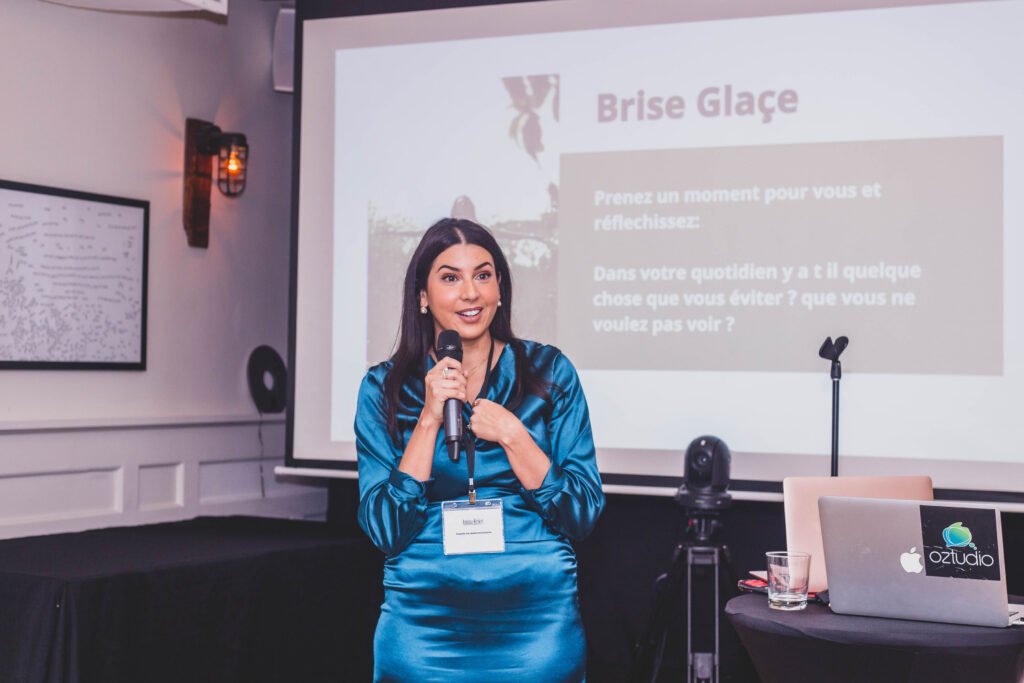
How hands-on entrepreneurship education can help young adults explore ideas, develop practical skills, and imagine new possibilities.
When we think about entrepreneurship education, we often imagine someone who already has a business idea and wants to turn it into a company. But what about young people who haven’t figured out what they want to do yet?
What about those who are still in school, exploring their interests, or wondering what opportunities might be available to them in the future?
Recently, I had a conversation with a program coordinator at a Montréal nonprofit organization that made me reflect on the role entrepreneurship education can play beyond business creation.
The organization wanted to give back to its young adult volunteers by offering them an opportunity to learn something new. Some were still in high school, while others were pursuing their studies or beginning to think about their professional futures.
The objective wasn’t necessarily to turn them into entrepreneurs. It was to introduce them to the possibilities of entrepreneurship, help them understand how businesses work, and give them something positive to look forward to.
That conversation inspired a different way of thinking about entrepreneurship workshops for young adults. At Abundance Bureau, we believe entrepreneurship education can be just as valuable for someone exploring their future as it is for someone preparing to launch a business.
Why entrepreneurship education matters before someone starts a business
Entrepreneurship is often presented as a destination: develop an idea, write a business plan, secure financing, and launch. But before any of those steps, there is something more fundamental. A person needs an opportunity to explore what interests them, understand their strengths, and discover what they might be capable of creating.
For young adults, this exploration can be particularly valuable. Learning how a business works introduces them to concepts they may not encounter in their everyday lives. They begin to understand how products and services are developed, why customers make purchasing decisions, how pricing works, and what it takes to bring an idea to market.
These lessons are useful even if participants never become business owners. Entrepreneurship education creates opportunities to practice communication, problem-solving, financial literacy, creativity, and decision-making. These are transferable skills that can support future studies, employment, community involvement, or entrepreneurship.
The goal isn’t to convince every young person to start a business. It’s to help them recognize that they have options.
Start with the person, not the business idea
One of the first things I explained during my conversation with the program coordinator was that I wouldn’t begin by teaching participants how to write a business plan. I would begin by getting to know them.
What are they interested in? What do they enjoy doing? Have they ever thought about starting something of their own? What do they already understand about business? What would they be excited to learn?
These questions matter because not everyone enters an entrepreneurship program with the same level of knowledge, confidence, or ambition. Some participants may already have a business idea. Others may be curious about entrepreneurship but have no idea where to begin. Some may simply want to learn a new skill.
A personalized approach makes room for all of them. For the program I proposed, each participant would begin with an individual coaching session to explore their interests, assess their understanding of entrepreneurship, and identify a realistic learning goal. From there, we would develop a simple plan together.
Rather than asking everyone to achieve the same outcome, participants would work toward something meaningful and achievable for them.
From Rose’s perspective: One of the most important questions I ask when designing a workshop is: What does success look like for this particular group? The answer changes everything. If the goal is to help young people explore their future, the learning experience should prioritize curiosity, confidence, and discovery rather than the pressure to launch a profitable business.
Why hands-on entrepreneurship workshops work
Entrepreneurship is difficult to understand through theory alone. Someone can listen to a presentation about marketing, pricing, or customer research and understand the definitions. But applying those concepts to an actual idea requires a different kind of learning.
That’s why Abundance Bureau workshops are designed around hands-on activities, guided discussions, and practical exercises. This approach is consistent with experiential learning theory, particularly the work of educational theorist David A. Kolb. His model describes learning as a process involving experience, reflection, conceptual understanding, and experimentation.
For entrepreneurship education, this means giving participants opportunities to try something, reflect on what happened, and use what they learned to improve their approach.
Imagine a participant who loves baking and wonders whether they could sell homemade cookies. Instead of immediately asking them to write a formal business plan, we could explore who might buy their cookies, what ingredients would cost, how they might decide on a price, and how they could introduce their idea to potential customers.
The participant begins to understand entrepreneurship by working through familiar, concrete situations. The same approach could apply to someone interested in photography, pet care, technology, fashion, or community services. By connecting business concepts to participants’ interests, learning becomes more accessible and relevant.
Combining individual coaching with group learning
One of the most interesting parts of designing this type of program is finding the right balance between individual coaching and collaborative learning. During my conversation with the nonprofit coordinator, we discussed the possibility of offering one-on-one sessions alongside group activities.
I recommended exploring both formats because they serve different purposes. Individual coaching gives participants the opportunity to ask questions, explore their interests, and progress at their own pace. It also allows the facilitator to adapt explanations and exercises to each person’s needs.
Group learning creates something different. Participants hear ideas they may never have considered, ask questions, exchange perspectives, and learn from one another.
For example, during a group brainstorming session, one participant might introduce an idea for a small clothing business. Another might ask how they would find customers, while someone else suggests using social media to test interest. The facilitator’s role is to guide the discussion, help participants think critically, and connect their ideas to practical business concepts.
This type of collaborative learning can be especially valuable for young adults who are still discovering their interests and developing their communication skills.
What could a youth entrepreneurship program look like?
Based on the conversation, I developed a proposal called The Abundance Entrepreneurship Academy, a short, in-person learning experience combining individual coaching, practical challenges, and optional group sessions.
The proposed program was designed for a small cohort of up to eight participants, with four individual coaching sessions per person. A six-week format would also include a group kickoff, a participant workbook, and a final celebration.
Rather than overwhelming participants with business terminology, the learning journey would introduce entrepreneurship through five connected themes:
- Exploring an idea: Identifying interests, strengths, and possible business opportunities.
- Understanding customers: Exploring who might benefit from an idea and how to test whether there is interest.
- Learning the basics of money: Understanding costs, simple budgets, and pricing.
- Introducing marketing: Learning how to communicate an idea and reach potential customers.
- Sharing what they’ve learned: Preparing a short presentation that explains their idea and the progress they’ve made.
Each individual session would build on the previous one. Between meetings, participants would complete a small, manageable challenge related to their personal learning goal.
These challenges might involve asking someone for feedback, researching a potential customer, calculating the cost of a product, or explaining their idea to another person. The purpose wouldn’t be to assign homework for the sake of it. It would be to help participants take small steps, reflect on their experiences, and develop a sense of progress.
Why small, achievable goals matter
One of the risks of entrepreneurship education is introducing expectations that are too ambitious for the audience. A young person exploring entrepreneurship for the first time doesn’t necessarily need a complete business plan, a financial forecast, or a registered company. They may simply need to understand how an idea becomes a product or service.
This is why realistic goal-setting is central to our approach. At the beginning of the program, each participant identifies a goal that reflects their interests and starting point. The facilitator then helps break that goal into manageable steps.
For one participant, success might mean developing a basic business idea. For another, it could mean understanding how to calculate costs or becoming comfortable presenting an idea in front of a group.
Progress is reviewed throughout the coaching sessions, giving participants opportunities to discuss what they found challenging, what they enjoyed, and what they would like to explore next. This approach also gives program coordinators a clearer way to understand what participants are learning without measuring success exclusively through business launches or revenue.
Celebrating progress, not just business success
During our conversation, the coordinator mentioned something that stayed with me. She wanted participants to leave feeling positive about their future, with a better understanding of what it takes to start a business. She also liked the idea of giving them a certificate to recognize their participation.
That became an important part of the proposed program. In the six-week academy format, participants would come together for a final celebration. Each person would have the opportunity to present their idea through a short, informal pitch and receive a certificate of completion.
The celebration wouldn’t be about identifying the best business idea. It would be about recognizing the effort, curiosity, and progress of each participant.
For community organizations, these moments can be meaningful. They give young people an opportunity to share what they’ve learned, recognize their accomplishments, and feel that their participation matters. A certificate doesn’t prove that someone is ready to run a business. But it can serve as a tangible reminder that they committed to learning something new and followed through.
Designing entrepreneurship education for different learning needs
Not every participant learns in the same way. This is especially important for organizations working with young people who have different educational backgrounds, communication preferences, abilities, or levels of familiarity with entrepreneurship.
A standardized curriculum may work for some participants while leaving others behind. A more flexible approach begins by understanding the group and adapting the learning experience accordingly.
That might mean using simpler language, introducing concepts through visual examples, allowing additional time for activities, or breaking complex assignments into smaller steps. It can also mean offering individual coaching alongside group sessions so participants have different opportunities to engage.
When designing programs for organizations supporting people with disabilities or diverse learning needs, it’s important to collaborate with staff who understand participants’ accessibility requirements and preferences rather than assuming one approach will work for everyone.
The goal is to create an environment where participants can contribute meaningfully and learn at a pace that works for them.
What should nonprofit organizations look for in an entrepreneurship facilitator?
For nonprofit organizations, choosing a facilitator involves more than reviewing someone’s professional experience. A person can be highly knowledgeable about business and still struggle to make entrepreneurship accessible to a group of beginners.
A strong facilitator needs to understand the audience, communicate clearly, adapt to different learning needs, and create an environment where participants feel comfortable asking questions. They also need to translate business concepts into practical activities that make sense for the people in the room.
At Abundance Bureau, our approach combines entrepreneurship, marketing, and hands-on facilitation.
Founder Rose Napoléon began her entrepreneurial journey in 2017 and brings more than eight years of experience in digital marketing, communications, and business development. Over the years, she has collaborated with nonprofits, digital agencies, and entrepreneurship support organizations, helping people develop practical business skills.
Since 2021, she has also facilitated entrepreneurship-related training for organizations such as Microcrédit Montréal. This experience allows us to translate business concepts into accessible, engaging activities adapted to participants’ different backgrounds and levels of experience.
But experience alone isn’t enough. Every new engagement begins with understanding the organization, the people it serves, and what participants should gain from the experience. That’s where the workshop design begins.
How can organizations measure the success of a youth entrepreneurship program?
Not every entrepreneurship program should be evaluated by the number of businesses launched. For a startup incubator, business creation, customer acquisition, and revenue may be appropriate indicators. For a community organization introducing young adults to entrepreneurship, success may look very different.
Participants might finish the program with a clearer understanding of business fundamentals, greater confidence explaining an idea, or more curiosity about future educational and career opportunities.
Organizations can assess these outcomes through simple activities before and after the program, participant reflections, facilitator observations, and feedback from participants themselves.
For example, asking participants how comfortable they feel explaining a business idea at the beginning and end of the program can help identify changes in confidence. Reviewing their individual learning goals can also demonstrate progress.
These measures don’t guarantee long-term outcomes, but they give organizations useful information about whether the learning experience is meeting its objectives. Most importantly, success criteria should be established before the program begins.
Frequently asked questions
Can entrepreneurship workshops benefit young adults who don’t have a business idea?
Yes. Entrepreneurship workshops can introduce young adults to business fundamentals while helping them explore their interests, develop practical skills, and discover new possibilities. Participants don’t need an existing business idea to benefit from the experience.
What topics should a beginner entrepreneurship workshop cover?
A beginner workshop can introduce business ideas, customer needs, simple budgeting, pricing, marketing, and communication. The content should be adapted to participants’ ages, interests, experience, and learning objectives.
Are individual coaching sessions better than group workshops?
Both formats offer benefits. Individual coaching allows participants to work toward personalized goals, while group workshops encourage collaboration, discussion, and peer learning. Combining the two can create a more flexible learning experience.

How long should a youth entrepreneurship program last?
The ideal duration depends on the organization’s objectives and participants’ availability. A short introductory workshop can provide initial exposure, while a four-to-six-week program allows more time for individual coaching, practical challenges, and reflection.
Can entrepreneurship workshops be adapted for participants with different learning needs?
Yes. Activities, explanations, pacing, and learning materials can be adapted in collaboration with the organization and participants. Understanding accessibility needs before the program begins is an important part of designing an inclusive experience.
Does Abundance Bureau offer entrepreneurship workshops for nonprofit organizations?
Yes. Abundance Bureau designs personalized marketing, sales, and entrepreneurship learning experiences for organizations across Canada. Workshops can be delivered in English or French, online or in person, depending on the program and its objectives.
Entrepreneurship education is about creating possibilities
One of the things I appreciate most about working with community organizations is discovering the different reasons they want to introduce entrepreneurship to the people they support. Sometimes, the objective is to help entrepreneurs increase sales or strengthen their marketing. Other times, it’s about giving young people an opportunity to discover something new. Both are valuable.
Entrepreneurship education doesn’t always need to end with a business launch. Sometimes, the most meaningful outcome is helping someone realize that an idea can be explored, a skill can be developed, and a goal can be reached one step at a time.
For nonprofit organizations, youth programs, and community groups, entrepreneurship workshops for young adults can become another way to support personal development, practical learning, and future opportunities.
At Abundance Bureau, that’s what we aim to create: learning experiences that meet participants where they are, encourage curiosity, and help them build the confidence to explore what’s possible.
Who Abundance Bureau Works With
Abundance Bureau delivers live, bilingual marketing, sales, and entrepreneurship workshops for organizations across Canada. We work with incubators, accelerators, nonprofits and foundations, business schools and colleges, as well as employment and reintegration programs.
Every engagement is designed around your participants’ realities and your program’s objectives. Whether you’re supporting entrepreneurs who are ready to grow their businesses or young adults exploring entrepreneurship for the first time, we adapt the learning experience to their needs.
We bring the content, the facilitation, and the structure. You bring the participants.
If you’re planning an entrepreneurship program that combines practical learning, personalized guidance, and hands-on activities, we’d love to explore how we can support your organization.
Plan a workshop with Abundance Bureau
hello@abundancebureau.co
438-371-4750
