
What Is True Freedom? A different Way to Think About It
If you search online for true freedom, you’ll quickly land on the same promise.
Financial independence.
Passive income.
Owning assets.
Never working for anyone again.
And while there is nothing wrong with any of that, I want to offer a different perspective. One that feels more honest, more sustainable, and more accessible to most people.
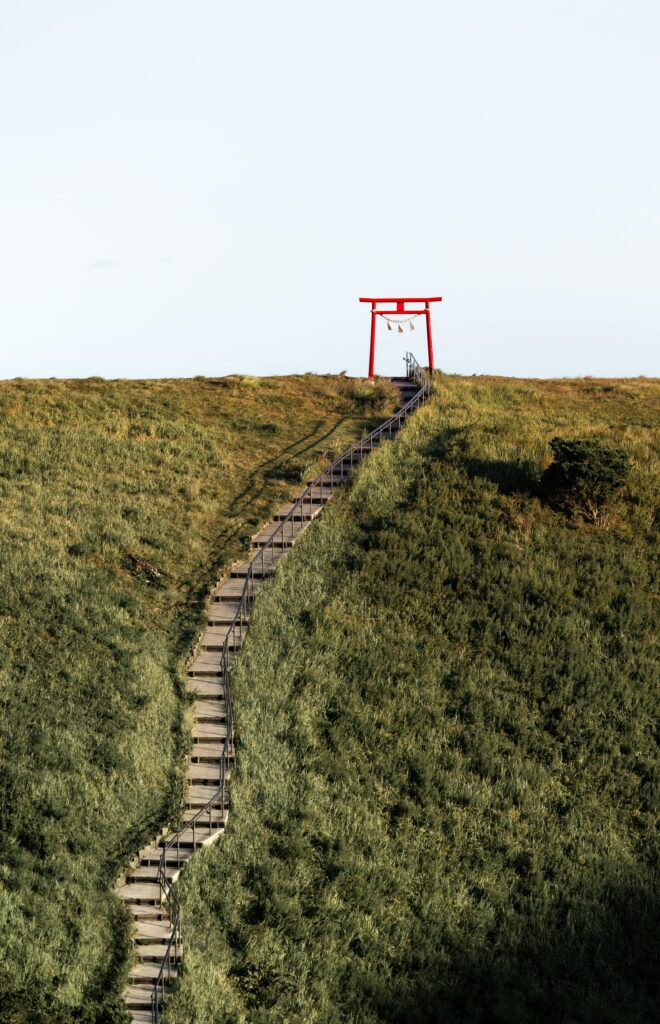
Photo credit: Marek Piwnicki
Because if freedom only exists at the end of a very specific financial journey, then what does that say about the rest of our lives?
The dominant idea of freedom
In our current system, freedom is often framed as an end goal.
Something you earn after years of effort.
Something you unlock once you reach a certain number.
Something tied to wealth, ownership, or status.
This narrative is powerful because it is measurable. It gives structure. It gives direction. It gives people hope.
But it also creates a quiet pressure.
If you are not financially independent yet, you are not free.
If you still work for someone, you are not free.
If you cannot opt out of the system, you are not free.
And that’s where this idea starts to feel incomplete.
Freedom is not the absence of structure
One of the biggest misunderstandings about freedom is that it requires total independence from systems.
No boss.
No schedule.
No constraints.
But complete absence of structure is not freedom. It’s instability.
Most of us don’t want to disappear from society or reject it entirely. We want to live within it with more agency, dignity, and choice.
True freedom isn’t about escaping structure.
It’s about how much room you have to move inside it.
The closest I’ve ever been to freedom
The moments where I’ve felt the freest in my life were not tied to money alone.
They were tied to:
- how I interpreted situations
- how I responded instead of reacted
- how quickly I could adapt
- how well I could generate opportunities, even in uncertainty
Freedom showed up when I stopped attaching my worth to outcomes and started focusing on my capacity to navigate change.
That kind of freedom doesn’t disappear in a market downturn.
It doesn’t collapse when a plan fails.
And it doesn’t depend on a single strategy working forever.
Freedom as a state of mind
This might sound abstract, but it’s actually very practical.
A free mind is one that:
- understands systems without being owned by them
- sees multiple paths instead of one “correct” way
- can make decisions without panic or urgency
- knows how to create options when none seem obvious
This is the kind of freedom that allows someone to work for an organization by choice, not by fear.
To build a business without making it their entire identity.
To pivot without feeling like they failed.
It’s not anti-capitalist.
It’s not anti-ambition.
It’s not anti-wealth.
It’s anti-dependence on a single definition of success.
The problem with financial freedom as the only goal
Financial freedom is a tool. Not a destination.
When it becomes the only metric, it creates a fragile form of freedom. One that relies on external conditions staying stable.
Not everyone will become ultra-wealthy.
Not everyone wants to.
And not everyone who is wealthy feels free.
If freedom only exists for a small percentage of people, then we should at least question whether we’re defining it correctly.
Opportunity is the real currency
What I’ve observed, again and again, is this:
The people who feel the most free are not always the richest.
They are the ones who can generate opportunities.
They know how to:
- build relationships
- read contexts
- translate skills across environments
- create value in different settings
This is abundance in action.
Not accumulation for its own sake, but movement, circulation, and adaptability.
Opportunity generation is what allows people to move between roles, industries, and phases of life without losing themselves.
Freedom you can access now
This version of freedom doesn’t require quitting your job.
It doesn’t require owning property.
It doesn’t require a perfect business model.
It starts with:
- understanding how value is created
- learning how systems actually work
- building clarity around your skills and perspective
- detaching your identity from one outcome
From there, freedom becomes something you practice, not something you wait for.
A more sustainable definition of freedom
Freedom is not the absence of work.
It’s the ability to choose how you engage with it.
Freedom is not infinite money.
It’s knowing you can adapt when things change.
Freedom is not escaping the system.
It’s moving through it with awareness, intention, and options.
That’s the kind of freedom I’m interested in.
And the kind I believe more people are actually searching for.
An invitation to start the year together
On Tuesday, January 6th at 12 pm (ET), I’m hosting a free one-hour live Zoom session:
The Abundance End-of-Year Review.
It’s a light, personal + business reflection space for founders who want to:
- Make sense of the year they just lived
- Reconnect with what actually mattered
- Create space before deciding what’s next
We’ll move through a few simple but powerful questions together.
No prep required.
Just bring a pen, some paper, and come as you are.
Because often, taking a step back is what allows everything else to move forward.
If you’re craving a moment of pause, perspective, and shared presence. I’d love to have you there.
Warmly,
Rose Napoléon
